Why vacuum heat treatment?

In a vacuum there is no oxygen to react with the hot surface, so parts leave the furnace clean and bright, without oxidation or decarburization.

Parts are quenched with nitrogen gas at a controllable cooling rate, for a better microstructure and less distortion.

Thermocouples mounted on the part itself track its surface and core temperatures through the whole hardening cycle. This real-time monitoring is key to controlling distortion and dimensional change in large, sensitive parts.

Furnace specifications

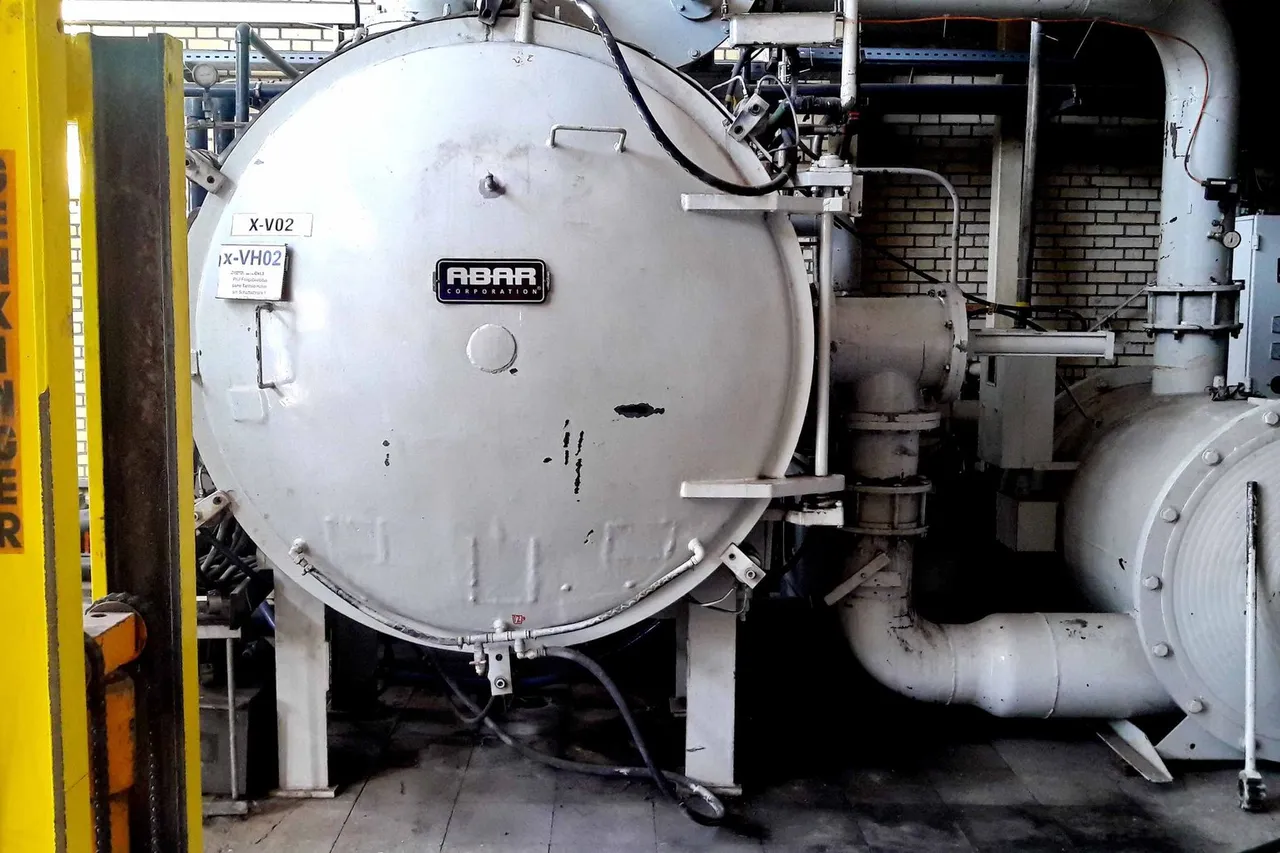
Schmetz and Abar vacuum furnaces

Units
2
Maximum load
600 kg
Working zone (L × W × H)
1100 × 600 × 600 mm
Maximum temperature
1100 °C
Quench gas
nitrogen

What we treat

  • Hot-work tool steels such as 1.2344, for forging dies, die-casting dies and similar parts: hardening and tempering, with stress relieving after rough machining where needed.
  • Cold-work tool steels such as 1.2379: hardening and tempering, with sub-zero treatment where needed.
  • Nickel superalloys such as Nimonic 80A: solution treatment and ageing to the relevant standard.

We can also supply the tool steel for your part.

Projects

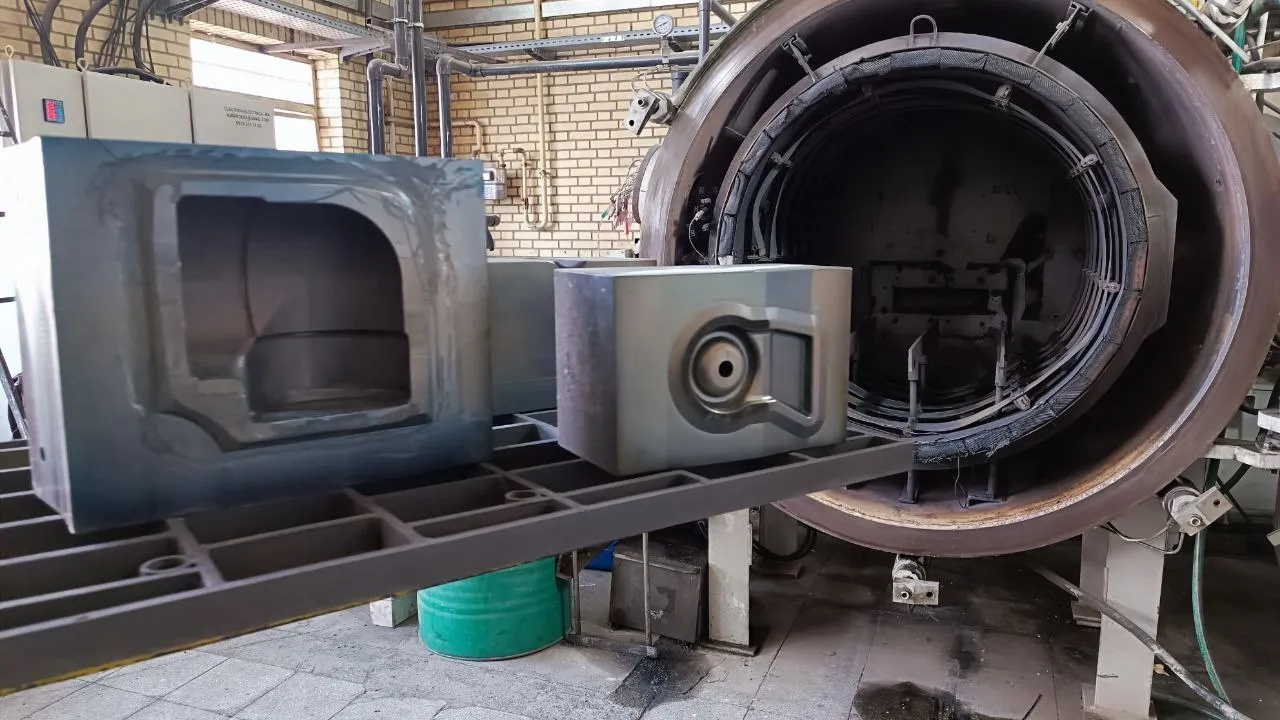
A large cylinder-head die in front of the open vacuum furnace

1.2344 cylinder-head die

Material
1.2344
Specified hardness
42–44 HRC
Thickness
400 mm
Weight
395 kg
Process
Vacuum hardening and tempering with a nitrogen quench
Process notes
  1. Preheating and stepped heating to 1030 °C, so the whole die austenitizes evenly.
  2. Slowing the heating rate at two points, so the surface and core temperatures can even out without unwanted thermal stress.
  3. Quenching in nitrogen gas at a controlled pressure, for the right cooling rate.
  4. Three tempers, tracked with contact thermocouples, to reduce residual stress and stabilize the mechanical properties.
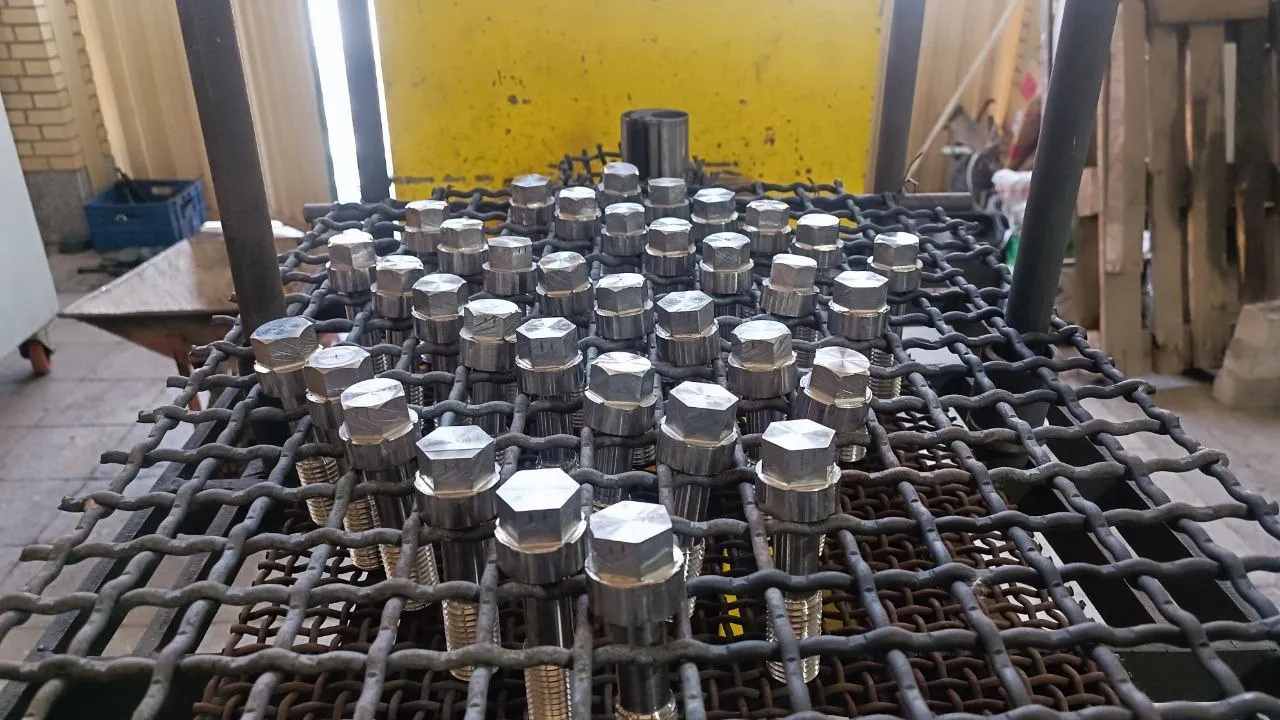
Nimonic 80A bolts standing on a furnace grid

Nimonic 80A nickel-alloy bolts

Material
Nimonic 80A
Process
Solution treatment and ageing
Standard
ASTM B637
Client
A power-generation company
Process notes

The heat treatment followed ASTM B637.

Solution treatment: the parts were heated to a high temperature in the vacuum furnace to dissolve the γ′ phase into the matrix, giving a uniform structure before ageing.

Ageing: the parts were then held for a long time at an intermediate temperature, so that γ′ precipitates as fine, evenly dispersed particles. These precipitates give the alloy its hardness, creep resistance and stability at high temperature.

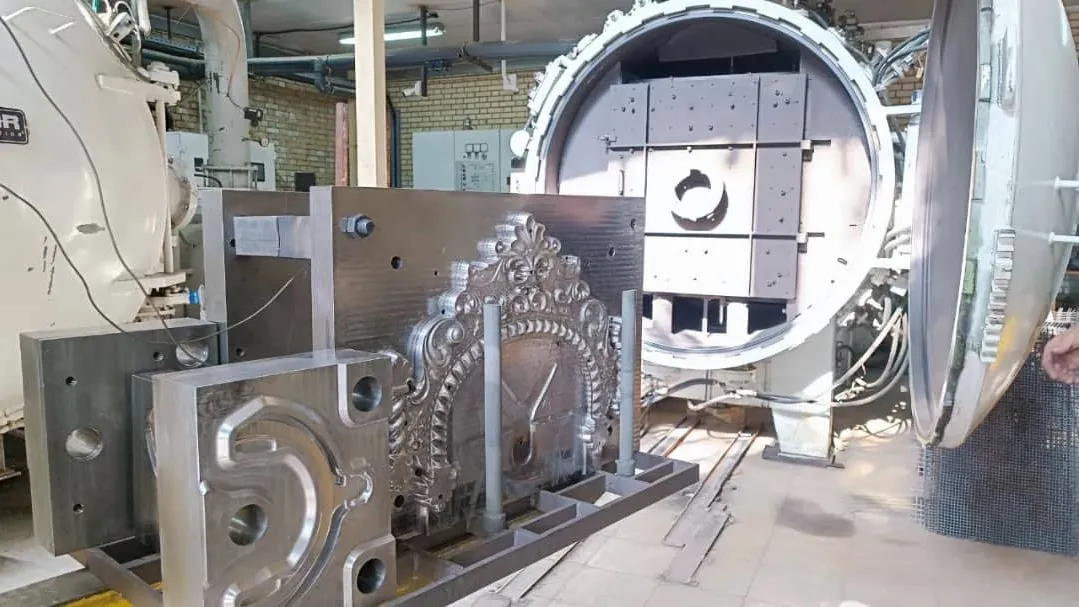
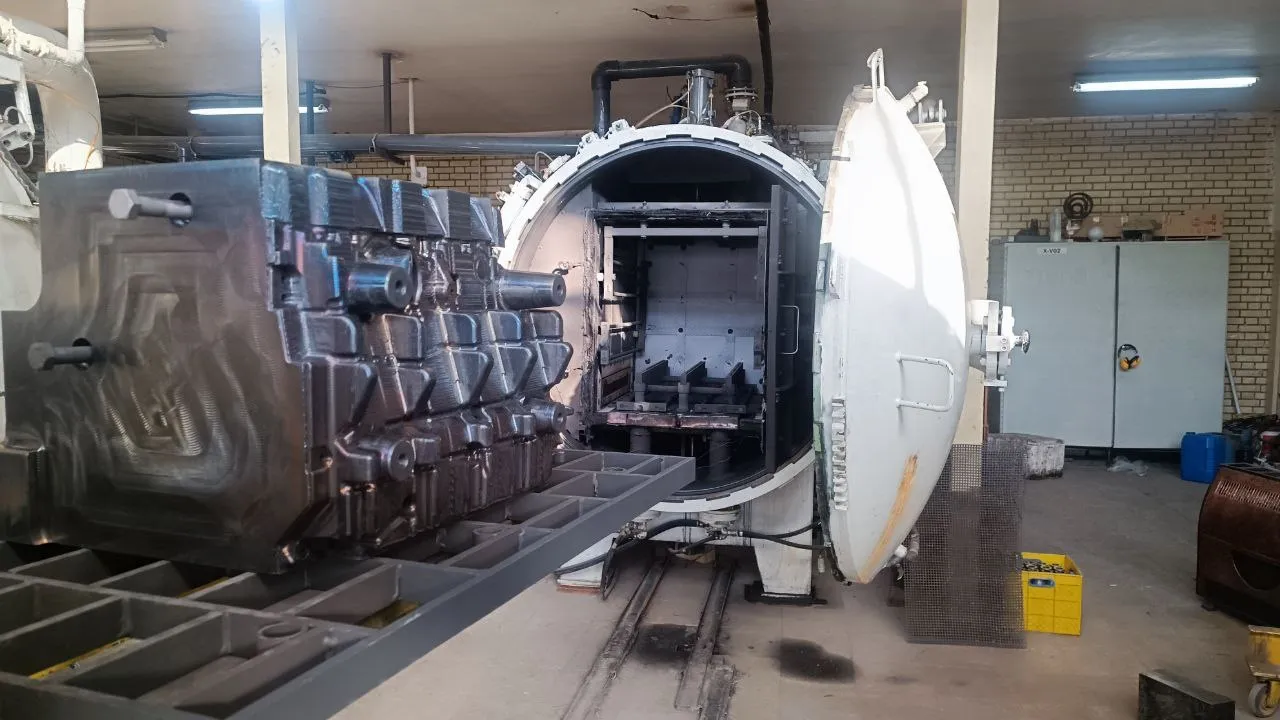
A die-casting die with a relief pattern beside the open vacuum furnace

1.2344 aluminium die-casting die

Material
1.2344
Specified hardness
48–50 HRC
Dimensions
60 × 700 × 505 mm
Process
Vacuum hardening and tempering
Process notes

Dies that are thin compared with their length and width tend to distort. For accurate dimensions with minimal distortion, such a die is best stress relieved at 600–650 °C after rough machining; this die was stress relieved too.

To control distortion and reduce the risk of cracking, the die was heated in steps, with holds at 650 °C and 850 °C; the hold at 650 °C was about twice the usual length. The austenitizing temperature was chosen at the most suitable point of the range, and the die was held there for 30 minutes, with its surface and core temperatures monitored throughout.

The next key point was controlling the quench rate around the martensite-start temperature (Ms), which the Schmetz vacuum furnace can monitor.

The die was tempered twice, for 3 hours each, at 525 °C and 600 °C, and delivered at 48–50 HRC.

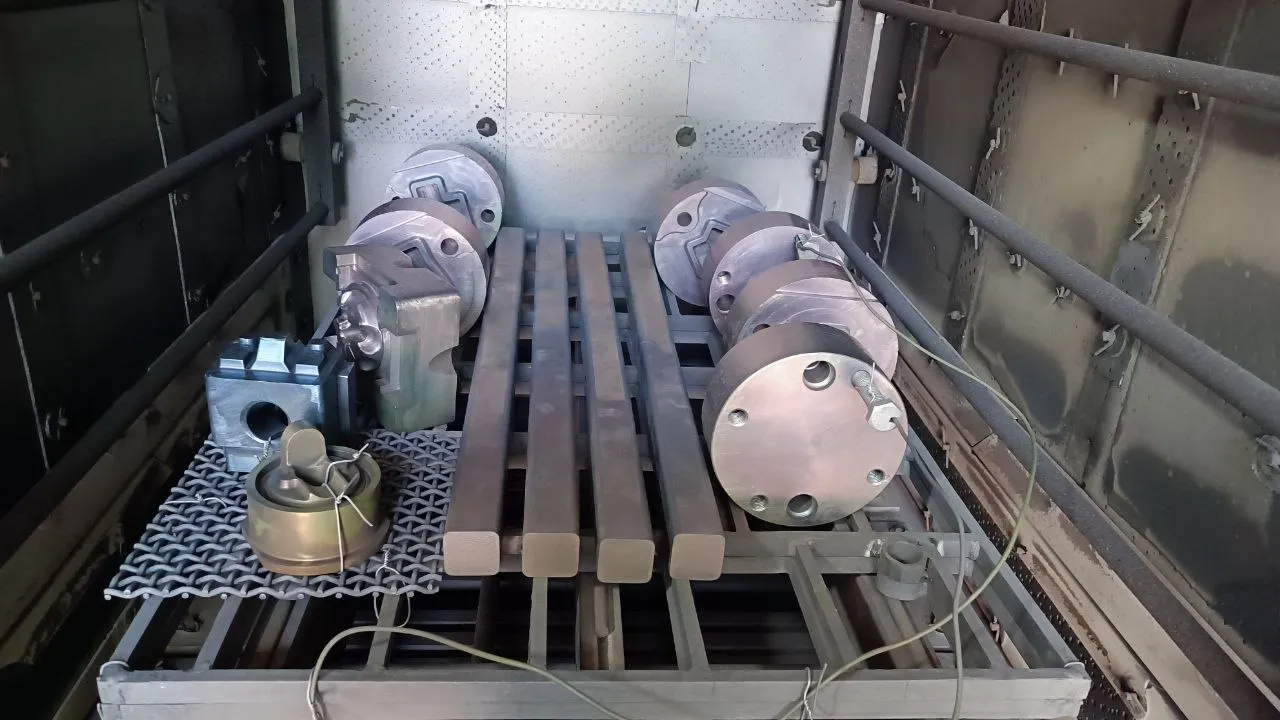
Forging dies and a forming die on a furnace rack, with thermocouples attached

1.2344 forging dies and a 1.2379 forming die

Forging dies

Material
1.2344
Specified hardness
43–45 HRC
Thickness
70 mm

Forming die

Material
1.2379
Specified hardness
56–58 HRC
Dimensions
40 × 40 × 700 mm
Process
Vacuum hardening and tempering; the forming die was also stress relieved and sub-zero treated
Process notes

These dies, in 1.2344 hot-work and 1.2379 cold-work tool steel, were heat treated in the Schmetz vacuum furnace. The forming die is extremely sensitive to dimensional change, so flexible thermocouples were placed on the parts with great care, to record the real part temperature during heating and cooling and confirm that the cycle run matched the cycle designed.

Heating was done in steps, with holds at 600 °C and 850 °C, so the microstructure changed gradually and evenly and thermal stress stayed to a minimum. After the hold at the austenitizing temperature of 1030 °C, the parts were quenched with nitrogen gas.

The Schmetz furnace can blow the cooling gas onto the load from two directions, giving a controlled quench in the chosen direction. For tighter dimensional control, the quench intensity was varied at the critical temperatures, following the CCT diagrams of these steels.

After hardening, the hot-work dies were tempered at 525 °C, and the cold-work die was given a mild temper to prepare it for sub-zero treatment at −80 °C. In all, the hot-work dies were tempered three times, and the cold-work die was tempered three times and sub-zero treated.

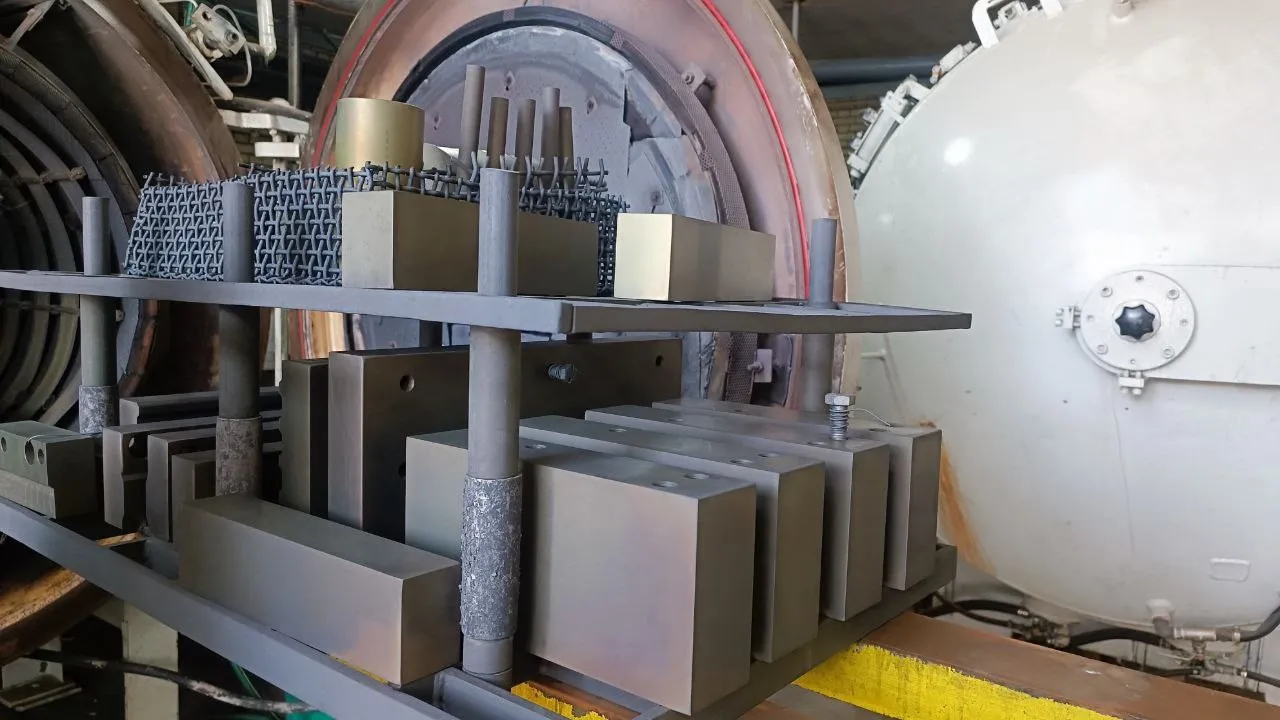
1.2379 blocks and parts on a furnace loading rack

1.2379 cold-work tool steel parts

Material
1.2379
Specified hardness
58–60 HRC
Thickness
30–100 mm
Process
Vacuum hardening, sub-zero treatment and tempering
Process notes

1.2379 is a high-chromium cold-work tool steel with high hardness and excellent wear resistance after heat treatment. The steps in the vacuum furnace were:

  1. Preheating
  2. Austenitizing in vacuum, in the usual range of 1020–1040 °C
  3. Fast quenching with nitrogen gas, to form martensite
  4. Sub-zero (cryogenic) treatment to transform the retained austenite
  5. Tempering in several stages (usually three) to reach the specified hardness
Round and square forging-die blocks ready to be loaded into the vacuum furnace

250 mm 1.2344 forging dies

Material
1.2344
Specified hardness
46–48 HRC
Thickness
250 mm
Process
Vacuum hardening and tempering
Process notes

These dies were hardened in the vacuum furnace following standard heat-treatment practice. They were heated in steps, with holds at 650 °C and 850 °C, up to the austenitizing temperature of 1030 °C, and after a sufficient hold they were quenched with nitrogen gas, so that the transformation to martensite was as complete as possible.

The dies were then tempered twice, at 525 °C and 610 °C, following the designed cycle. Thermocouples tracked the surface and core temperatures, so the cycle could be adjusted if needed.

We had also supplied the steel for these dies.

Two forging dies with machined cavities in front of the vacuum furnace

280 mm 1.2344 forging dies

Material
1.2344
Specified hardness
45–48 HRC
Thickness
280 mm
Process
Vacuum hardening and tempering
Process notes

Stepped heating with holds at 650 °C and 850 °C, a hold at the austenitizing temperature of 1030 °C, a nitrogen gas quench and two tempers at 525 °C and 610 °C, with thermocouples tracking the surface and core temperatures throughout.

We had also supplied the steel for these dies.

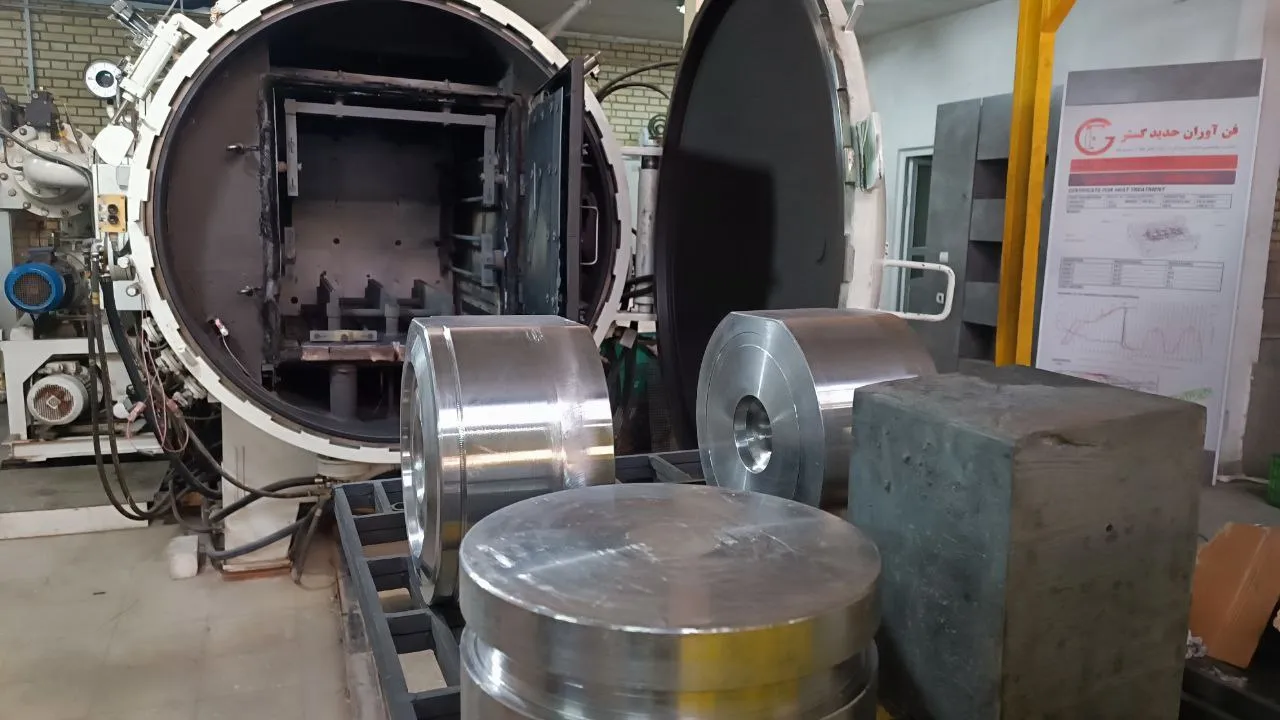
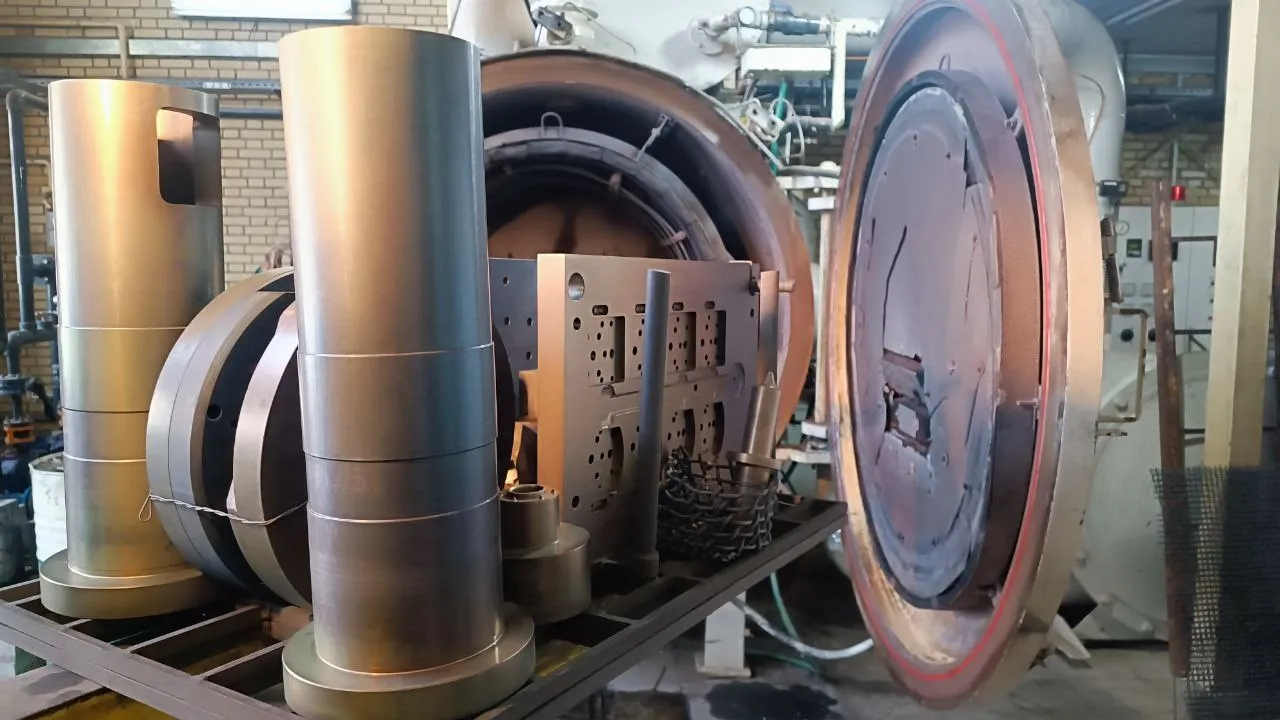
Tall cylinders and discs on a loading rack next to the vacuum furnace

1.2344 cylinders

Material
1.2344
Specified hardness
44–46 HRC
Thickness
20 mm
Process
Vacuum hardening and tempering
Process notes

These cylinders were hardened in the vacuum furnace together with other parts in the same steel, austenitized at about 1030 °C and then tempered. Thermocouples attached to the parts tracked their real temperature through hardening and tempering.

Talk to us about your part

Tell our specialists the material, size and hardness your part needs, and we will recommend the right process.

Parts reception and delivery: daily, 8:00–20:00

Call us +98 41 3447 9344All contact details