How it works

  1. The part is hardened and quenched.
  2. It is typically tempered at 150 °C.
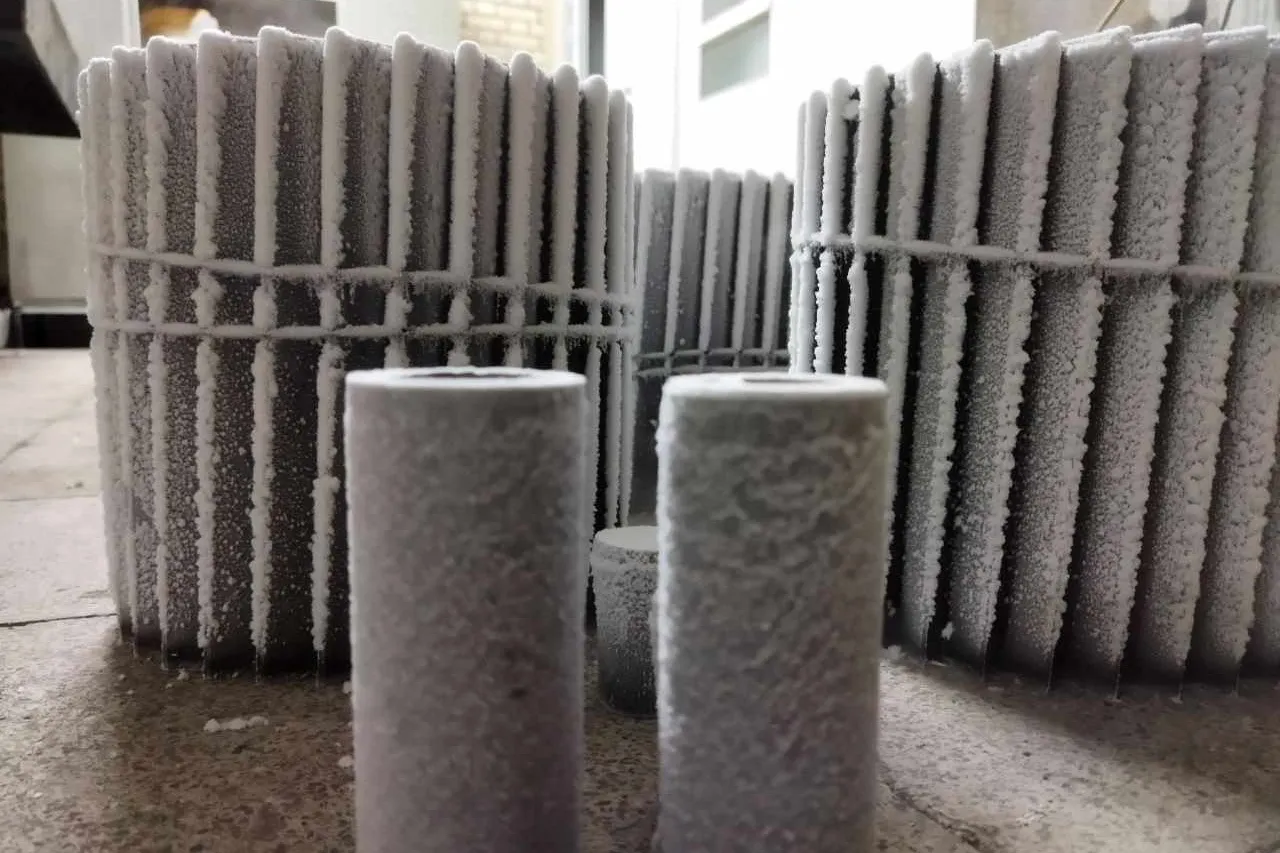
  3. The part is cooled to the sub-zero temperature and held until it has cooled right through.
  4. It returns to room temperature.
  5. It is given its final temper.

Benefits

  • A more complete transformation of retained austenite into martensite, and so more uniform hardness
  • Dimensional stability: no retained austenite is left to transform later in service and change the part's size
  • Better wear resistance, especially in tool steels
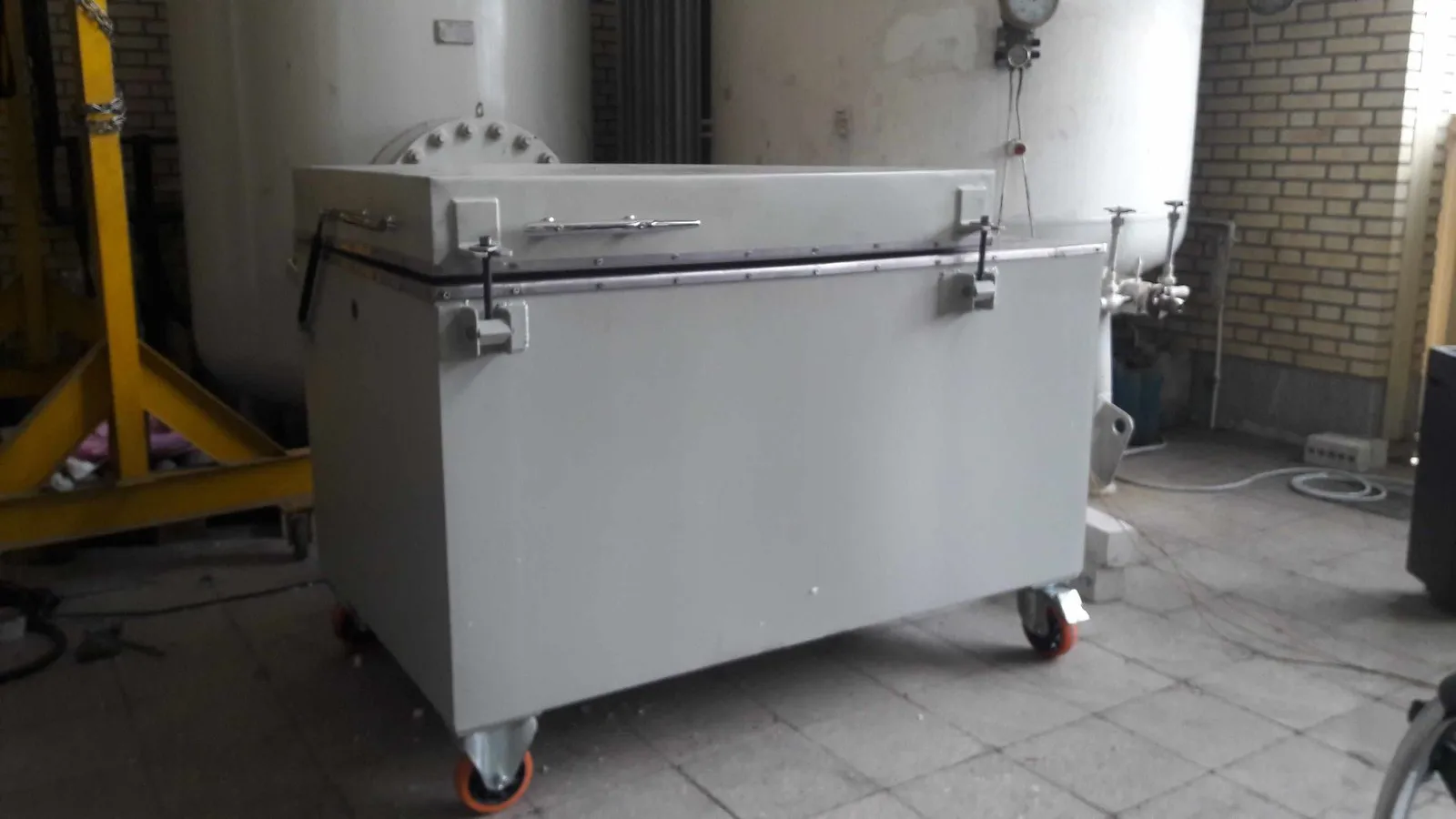
The sub-zero treatment chamber in the workshop
Sub-zero treatment chamber

Which parts need sub-zero treatment?

High-carbon steels, tool and high-alloy steels, carburized (case-hardened) parts, where retained austenite is a common heat-treatment defect, and aerospace parts, where a complete transformation of austenite matters.

Sub-zero treatment follows hardening: for example, after vacuum hardening of cold-work tool steels.

Projects

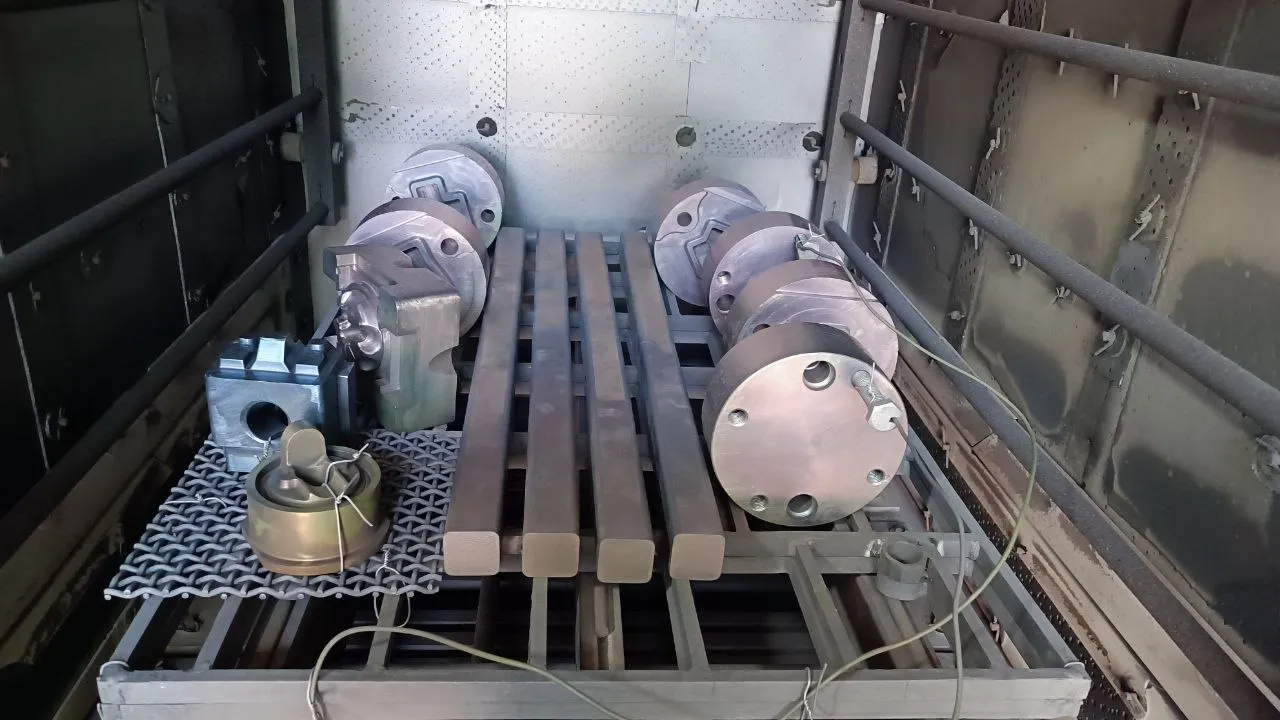
Forging dies and a forming die on a furnace rack, with thermocouples attached

1.2344 forging dies and a 1.2379 forming die

Forging dies

Material
1.2344
Specified hardness
43–45 HRC
Thickness
70 mm

Forming die

Material
1.2379
Specified hardness
56–58 HRC
Dimensions
40 × 40 × 700 mm
Process
Vacuum hardening and tempering; the forming die was also stress relieved and sub-zero treated
Process notes

These dies, in 1.2344 hot-work and 1.2379 cold-work tool steel, were heat treated in the Schmetz vacuum furnace. The forming die is extremely sensitive to dimensional change, so flexible thermocouples were placed on the parts with great care, to record the real part temperature during heating and cooling and confirm that the cycle run matched the cycle designed.

Heating was done in steps, with holds at 600 °C and 850 °C, so the microstructure changed gradually and evenly and thermal stress stayed to a minimum. After the hold at the austenitizing temperature of 1030 °C, the parts were quenched with nitrogen gas.

The Schmetz furnace can blow the cooling gas onto the load from two directions, giving a controlled quench in the chosen direction. For tighter dimensional control, the quench intensity was varied at the critical temperatures, following the CCT diagrams of these steels.

After hardening, the hot-work dies were tempered at 525 °C, and the cold-work die was given a mild temper to prepare it for sub-zero treatment at −80 °C. In all, the hot-work dies were tempered three times, and the cold-work die was tempered three times and sub-zero treated.
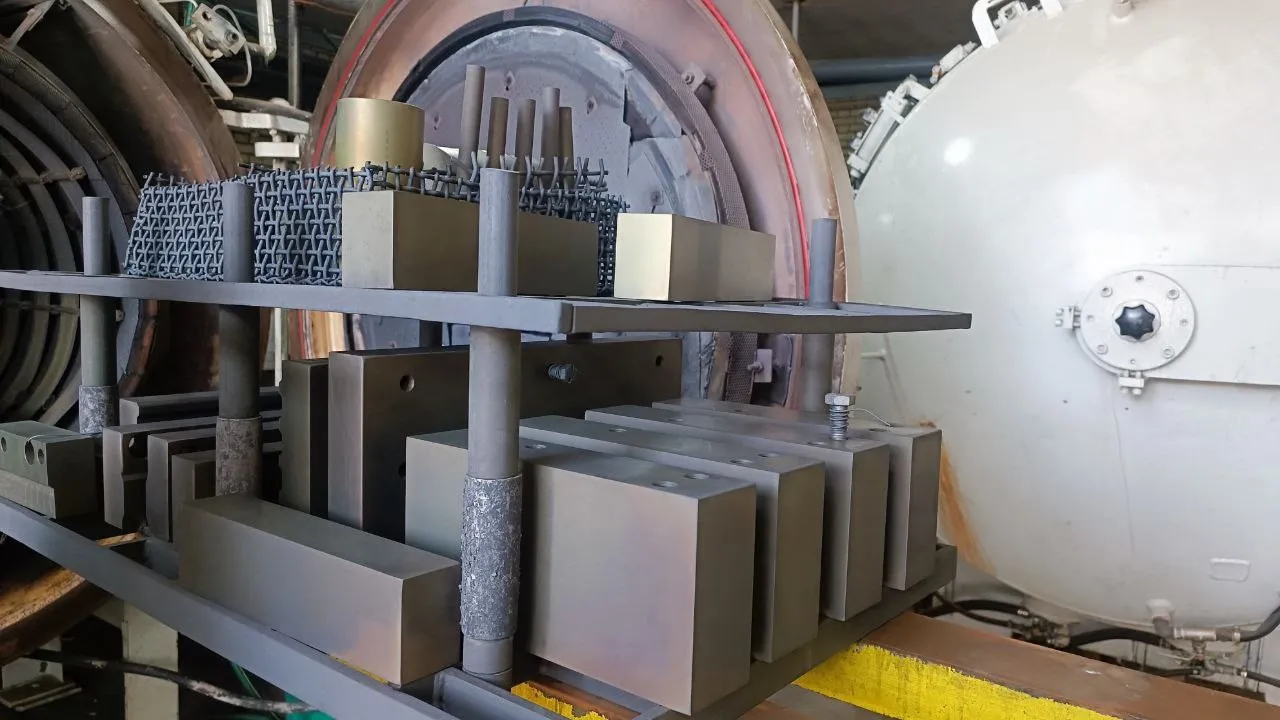
1.2379 blocks and parts on a furnace loading rack

1.2379 cold-work tool steel parts

Material
1.2379
Specified hardness
58–60 HRC
Thickness
30–100 mm
Process
Vacuum hardening, sub-zero treatment and tempering
Process notes

1.2379 is a high-chromium cold-work tool steel with high hardness and excellent wear resistance after heat treatment. The steps in the vacuum furnace were:

  1. Preheating
  2. Austenitizing in vacuum, in the usual range of 1020–1040 °C
  3. Fast quenching with nitrogen gas, to form martensite
  4. Sub-zero (cryogenic) treatment to transform the retained austenite
  5. Tempering in several stages (usually three) to reach the specified hardness

Talk to us about your part

Tell our specialists the material, size and hardness your part needs, and we will recommend the right process.

Parts reception and delivery: daily, 8:00–20:00

Call us +98 41 3447 9344All contact details