Precise control of atmosphere and temperature

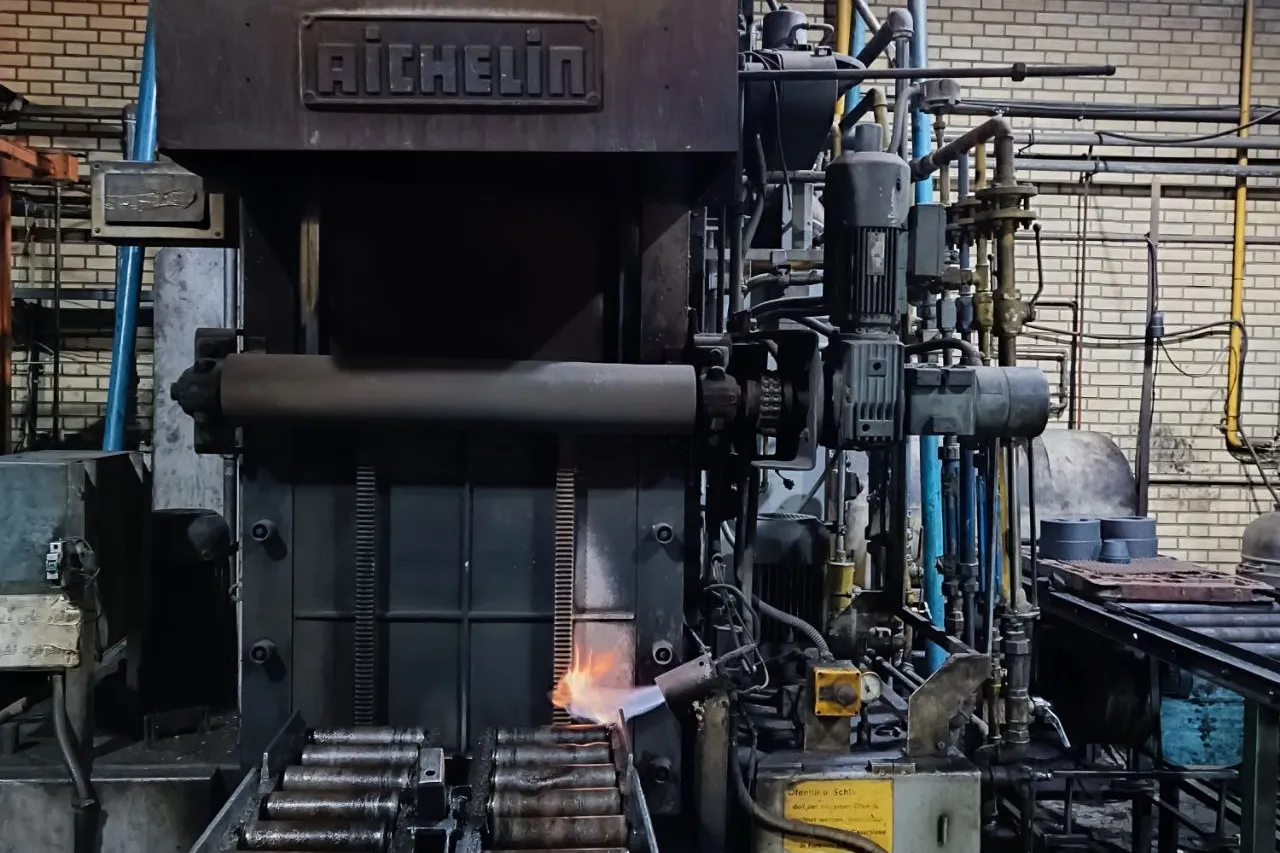
Both lines have atmosphere and temperature controllers and an oxygen probe, so the furnace carbon potential is closely controlled and set to suit the steel being treated. Parallel, calibrated thermocouples check that the process temperature is right.

The endothermic gas for the furnaces comes from two endothermic generators running around the clock.

Processes

  • Gas carburizing and hardening
  • Hardening and tempering
  • Normalizing
  • Annealing and soft annealing
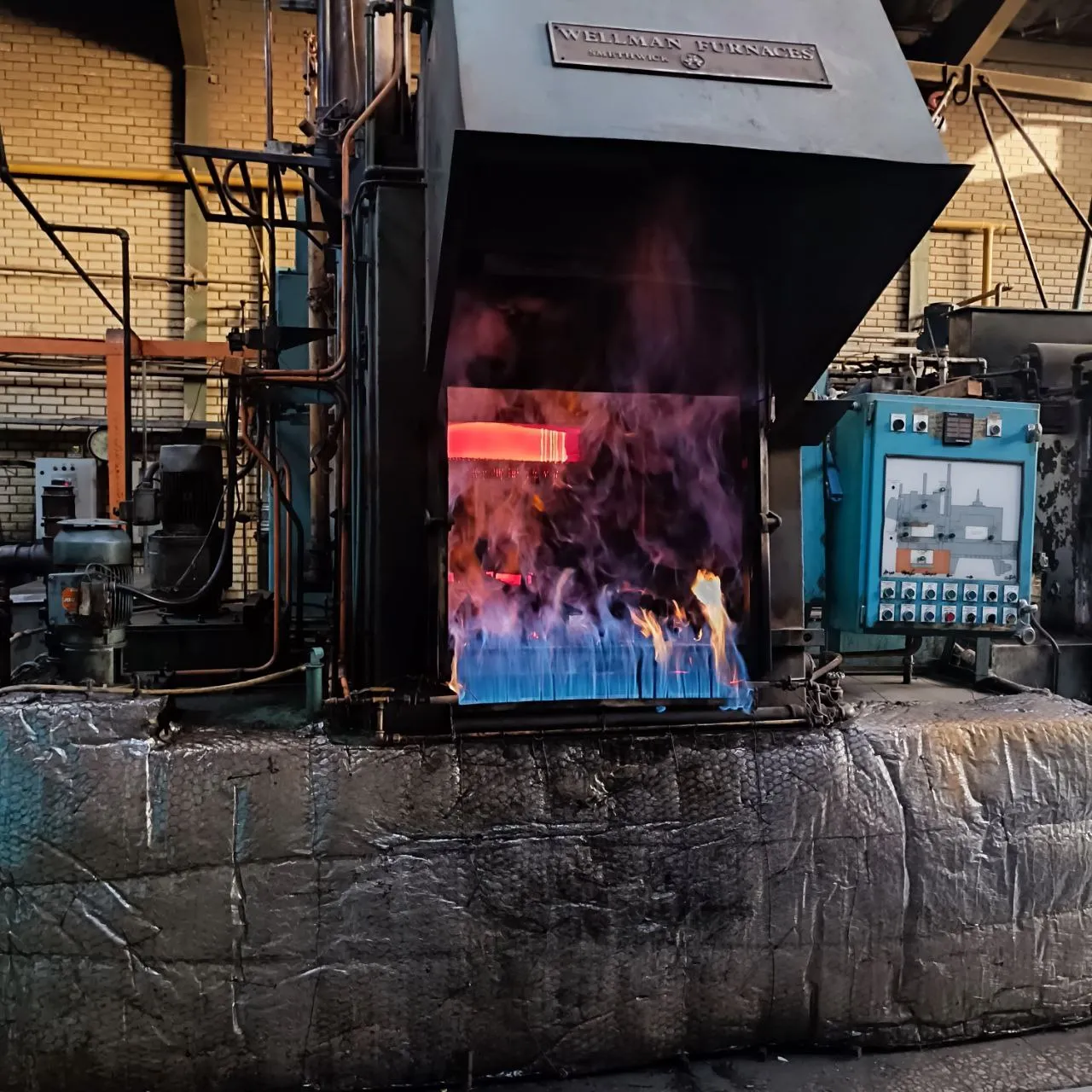
Wellman controlled-atmosphere furnace with its door open
Wellman controlled-atmosphere furnace

Furnace specifications

Wellman controlled-atmosphere furnace

Maximum load
600 kg
Working zone (L × W × H)
1400 × 725 × 500 mm
Maximum temperature
930 °C
Process temperatures
780–930 °C

Aichelin controlled-atmosphere furnace

Maximum load
200 kg
Working zone (L × W × H)
900 × 500 × 380 mm
Maximum temperature
930 °C
Process temperatures
780–930 °C

Projects

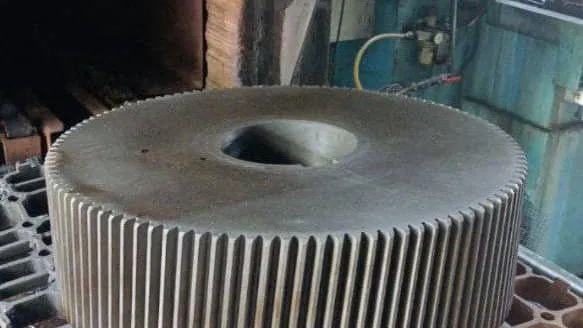
A large straight-cut gear on a furnace basket

500 kg 16MnCr5 gear

Material
16MnCr5 (1.7131)
Specified hardness
56–60 HRC
Thickness
250 mm
Weight
500 kg
Effective case depth
2.5 mm
Process
Carburizing and hardening
Process notes

The gear's large section, and the temperature difference between its surface and core during heating and quenching, make its heat treatment very sensitive. Cracks are far more likely to start and grow in a part like this than in an automotive gearbox gear.

So the temperature was raised in steps, at 450 °C, 800 °C and 860 °C, and finally to 920 °C. The oil temperature and quench time were chosen with care, and after hardening the gear was tempered twice.
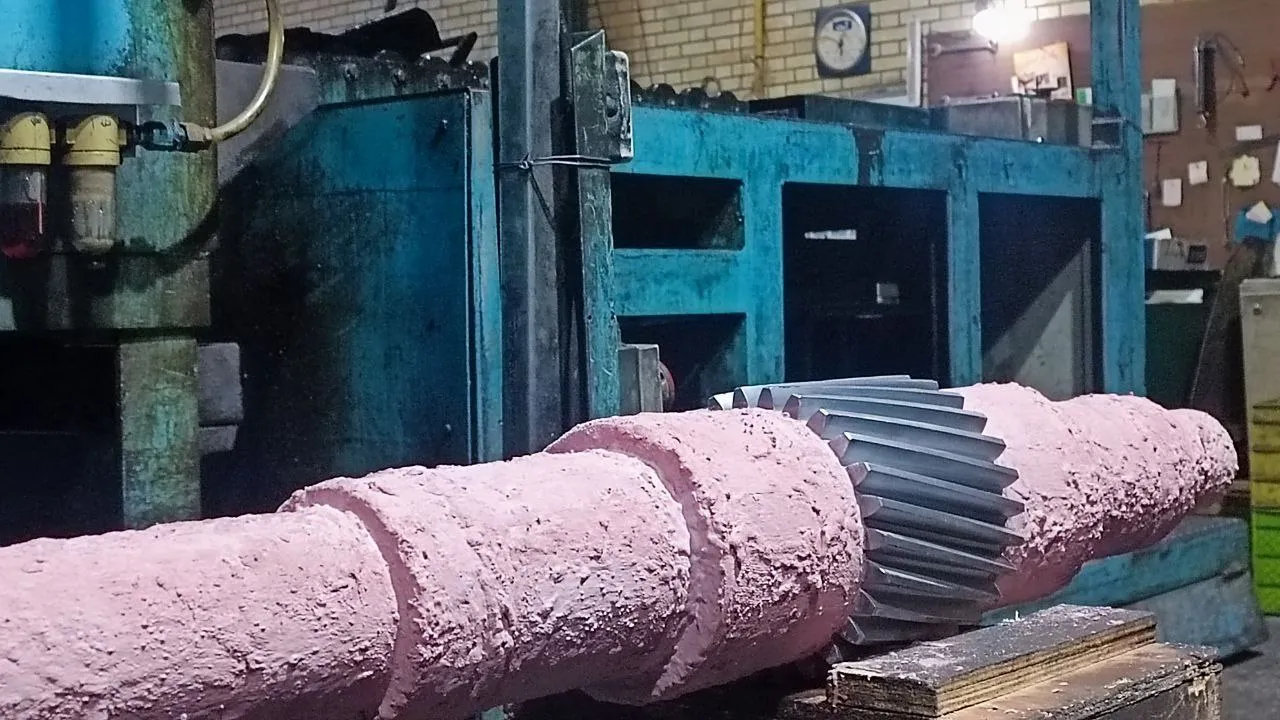
A pinion shaft coated in pink anti-carburizing paste everywhere except the teeth

1200 mm 1.6587 pinion shaft

Material
1.6587
Specified hardness
57–59 HRC
Length
1200 mm
Diameter
150–300 mm
Weight
150 kg
Effective case depth
2–2.5 mm
Process
Selective carburizing of the teeth, then quenching and tempering
Process notes

The aim was to build a hard case on the teeth only of a long shaft in 1.6587 alloy steel, without carburizing the shaft body.

To prevent unwanted carburizing, every surface except the teeth was coated with anti-carburizing paste, applied carefully and evenly for the best protection.

The shaft went through a multi-stage carburizing cycle with close control of temperature, atmosphere and time, to build an effective case depth of about 2–2.5 mm on the teeth.

After carburizing, the shaft was quenched and then tempered.

Runout was measured at every stage of the heat treatment and corrected where needed. The final runout of the whole shaft was under 0.5 mm, within the customer's specification.

Talk to us about your part

Tell our specialists the material, size and hardness your part needs, and we will recommend the right process.

Parts reception and delivery: daily, 8:00–20:00

Call us +98 41 3447 9344All contact details